Translate

Showing posts with label Brazil. Show all posts

Sunday, 14 July 2013

Latin American Countries to Recall Ambassadors from Selected European Countries


Leaders in Latin American took a very drastic decision in the wake of the mistreatment of one of their own by the symphatisers of the United States over the Snowden saga. The leaders are to summon the European ambassadors for countries who blocked their airspace to Bolivian President Evo Morales and demand an explanation. Brazil, Argentina, Uruguay and Venezuela, on Friday decided to call their representatives in Spain, France, Italy and Portugal for consultations.

Bolivia demanded apologies from the four European nations for the July 2 dramatic airspace blockade and detour to Vienna, when Morales' plane was blocked from entering the airspace above several countries. The president was flying home from a meeting of natural gas producers in Moscow.

European governments are believed to have acted on suspicions that fugitive US intelligence leaker Edward Snowden, who had been in diplomatic impasse in the Moscow airport, was on board the plane. The decision to take this stance was made during a summit of the Mercosur trade bloc. Bolivia is in the process of becoming a full member of Mercosur but is currently an associate.

"We emphatically reject the interception of telecommunications and espionage actions in our nations, as they constitute a violation of human rights, of the right of our citizens to privacy and information,'' Mercosur leaders said in the summit's final statement. "It's unacceptable behaviour that breaches our sovereignty and harms relations between nations."

The South American group also defended the right of asylum after Venezuela, Bolivia and Nicaragua recently offered it to Snowden. Washington has put pressure on regional presidents to block Snowden from finding refuge in Latin America. "We repudiate any activity that could undermine the authority of States to grant and fully implement the right of asylum," the statement said.

"We reject any attempt in pressuring, harassment or criminalisation of a State over a country's sovereign right to grant asylum." Uruguayan Foreign Minister Luis Almagro said the four Mercosur trace bloc nations will recall their own ambassadors in the European countries involved for consultations over the incident. The actions of the four European countries were "unfounded, discriminatory and arbitrary, in a flagrant violation of the precepts of international law," Almagro said.

He said the summit found that Morales was subjected to "neo-colonial practices." "It is an incredible, unfriendly and hostile action that violates human rights and affects the freedom of transit and movement and the immunity that every head of state enjoys," Mercosur leaders concluded, according to Almagro.

Brazilian President Dilma Rousseff said that the European actions were offensive to each of the leaders at the summit as Latin American presidents, and vowed "concrete and effective actions, be it with regard to the governments or the ambassadors of those countries." According to US National Security Agency (NSA) documents leaked by Snowden that the United States spied on many countries around the world including Mercosur members Brazil, Argentina and Venezuela.

Snowden was granted audience by Human Rights Watch in Moscow. He hinted that he would prefer to be in Russia where he is safe because of the hurdles of and dangers in flying to Latin America. He earlier wrote to 21 countries for asylum and has received no positive response. Wikileaks later revealed he wrote to additional six.

Reports from Moscow reveal Russia is yet to formally receive his asylum request. The Russian  President has expressed willingness in granting him asylum only to the extent that he stops the damaging act of revealing US secrets.

The White House, after Snowden's meeting with HRW, said Russia should not provide him with 'Propaganda Platform'. UN human rights chief, Navi Pillay in her first reaction on the Snowden imbroglio said the fiugitive NSA leaker is worth protecting and the world rejects US espionage act.

Friday, 28 June 2013

African Leaders prefer United States to China - Obama


President Barack is in Johannnesburg for his second stop on his week-long African tour where he is expected to promote democracy and food security.

White House officials hope Obama's three-nation tour of Africa - his first substantial visit to the continent since taking office in 2009 - will compensate for what some view as years of neglect by America's first black president.

Obama has been conscious on the second country he is visiting which is South Africa because of the health condition of the man who is just like him; the first black president of South Africa - Nelson Mandela. Mandela's ex-wife, Winnie Madikizela-Mandela, said his condition had improved in the past few days. The visit has not been all rosy and jaw-jaw.

Nearly 1,000 trade unionists, Muslim activists and South African Communist Party members marched through the capital to the US Embassy, where they burned an American flag and called Obama's foreign policy 'arrogant and oppressive'.

Muslim activists held prayers in a car park outside the embassy. Leader Imam Sayeed Mohammed told the group: "We hope that Mandela feels better and that Obama can learn from him."

New York Times reports that Obama sees Mandela, also known as Madiba, as a hero. Whether they are able to meet or not, officials said his trip would serve largely as a tribute to the anti-apartheid leader. Like Mandela, Obama has received the Nobel Peace Prize and both men were the first black presidents of their nations.

Madiba was enamoured by the young Illinois senator's charisma while Mandela enthralled Obama when they met in 2005. Obama is to visit Robben Island, where Mandela spent years in prison under South Africa's former white minority regime. He told reporters his message in South Africa would draw from the lessons of Mandela's life.

"If we focus on what Africa as a continent can do together and what these countries can do when they're unified, as opposed to when they're divided by tribe or race or religion, then Africa's rise will continue," Obama said.

White House officials said Obama would hold a "town hall" on Saturday with youth leaders in Soweto, the Johannesburg township known for 1976 student protests against apartheid.

He will discuss a new exchange programme for African students with US colleges and universities. The event will include youth in Uganda, Nigeria and Kenya participating through video conference, and will be televised in those countries, White House officials said. Obama's only previous visit to the African continent was a one-day stopover in Ghana at the beginning of his first term.

While acknowledging that Obama has not spent as much time in Africa as people hoped, the White House is eager to highlight what it has done, in part to end unflattering comparisons to accomplishments of predecessors George W. Bush and Bill Clinton.

"Given the budget constraints, for us to try to get the kind of money that President Bush was able to get out of the Republican House for massively scaled new foreign aid programmes is very difficult," Obama said. Obama and the Republican-controlled House of Representatives have fought bitterly over government spending. US foreign aid is a perennial target for lawmakers who want more budget cuts.

Reuters report that before departing Senegal, Obama met farmers and local entrepreneurs to discuss new technologies helping to raise agricultural output in West Africa, one of the world's most under-developed and drought-prone regions. The technical aid in the US government's "Feed the Future" programme leverages money from the private sector and aid groups to help small farmers.

Obama said he would announce an initiative to use the same strategies for the power sector, a model he said makes the most of the shrinking US foreign aid budget. "I think everything we do is designed to make sure that Africa is not viewed as a dependent, as a charity case, but is instead viewed as a partner," he said.

Obama acknowledged that China, Brazil, India and other countries have been increasingly active in Africa and said the United States risks being left behind. But he said the US approach to development is preferred by African leaders.

"They recognise that China's primary interest is being able to obtain access for natural resources in Africa to feed the manufacturers in export-driven policies of the Chinese economy," Obama said. he stated that "Oftentimes that leaves Africa as simply an exporter of raw goods" as opposed to creating long-term jobs.

Thursday, 27 June 2013

Nigeria and South Africa lose out in Foreign Direct Investment in 2012


A United Nations report reveals that Foreign Direct Investment into the economies of the African Giants; Nigeria and South Africa plummeted despite the high record in Africa in 2012 which was among the two continents to witness such in the year. Year-on-year rise in FDI inflows was witnessed by South America; it which grew 12 percent, though flows to the Latin America and Caribbean region as a whole declined.

Reuters report that while global FDI fell by 18 percent last year, Africa bucked the trend with inflows increasing 5 percent to $50 billion, as countries like Mozambique, Tanzania and Uganda reaped the benefits of new discoveries of oil and gas, according to the 2013 World Investment Report published by the United Nations Conference on Trade and Development.

Although West Africa had the biggest share of investment, flows to the region declined by 5 percent to $16.8 billion largely due to decreased investment in the continent's top oil producer Nigeria. Its FDI inflows fell from $8.9 billion in 2011 to $7 billion last year due to political insecurity and a weak global economy, UNCTAD said.

FDI flows to South Africa slumped 24 percent to $4.6 billion in 2012, largely due to a foreign mining company offloading its stake in a South African subsidiary, the report said. The case of Nigeria is complex because it is fighting an insurgency in the north which is drastically affecting investors confidence.

However, inflows to Mozambique, where companies like Brazil's Vale and London-listed Rio Tinto are developing huge offshore gas and coal deposits, doubled to $5.2 billion. FDI to central Africa surged 23 percent to a record $10 billion, while in east Africa recently discovered gas reserves in Tanzania and oil fields in Uganda resulted in a 40 percent jump to $6.3 billion.

The report also found that African countries, led by South Africa and Angola are stepping up their investment overseas, with FDI outflows from the continent nearly tripling from $5 billion in 2011 to $14 billion last year.

Sunday, 17 February 2013

On Tax: Americans Renounce Citizenship


Thousands of Americans pack their suitcases, rip up their US passports and move permanently overseas to prevent Uncle Sam from taking their money evey year in anger over the latest tax hikes each year. In the first three quarters of 2012, more than 1,100 Americans renounced their citizenship and made their homes elsewhere, according to the Federal Register.

Available data does not yet include those who left in the fourth quarter, but it is on track to surpass the 1,781 Americans who relinquished their passports in 2011. And the number of Americans who ditched the US in 2011 was seven times higher than those who left in 2008.

With 6 million US citizens living abroad and continuing to pay US taxes, expatriates increasingly abandon their citizenship for the sake of saving cash. The US is the only industrialized country that requires its overseas citizens to pay income taxes – even if their income is generated abroad.

And for wealthy expatriates, the financial consequences of remaining a US citizen are most severe. Individuals earning more than $400,000 a year and married couples earning more than $450,000 a year will be paying an income tax rate of 39.6 percent – which is up from last year’s rate of 35 percent.

Those who earn more than $1 million annually will pay Uncle Sam about $170,341 more this fiscal year, according to the Tax Policy Center. Those who fear losing their savings frequently move to countries that do not tax their incomes.

One third of all billionaires that moved from the US to another country chose to go to ‘tax havens’ such as Switzerland, Bahamas, and Singapore, according to a 2012 study by the Research Institute of Industrial Economics.

While those who forego their citizenship will lose protection from the US government and could face difficulty in visiting the US, expatriates increasingly consider it worth it – including high-profile celebrities like 73-year-old American-born singer Tina Turner and Facebook co-founder Eduardo Saverin.

Turner, who is worth an estimated $200 million, in January became a Swiss citizen and ditched her US citizenship. Saverin, whose net worth is an estimated $2.2 billion, holds Brazilian citizenship and lives in Singapore. Bloomberg estimates that the Facebook co-founder saved at least $67 million in federal income taxes by cutting his ties to the US.

But while the rich and famous make headlines for escaping the IRS’ grip on their finances, all American expatriates are subject to US taxes and are required by law to file estimated taxes and income, estate and gift tax returns. Some lawmakers are even trying to subject Americans to taxes even after giving up their citizenship. Sens.

Charles Schumer and Bob Casey last yearsuggestedthat Congress vote for a law that would force former US citizens to pay taxes for years after renouncing their citizenship – as well as ban them from ever returning to the US.

But in the short-term, ditching the US comes with its own financial penalties: Americans renouncing citizenship are required to pay an often-hefty exit fee. Those whose net worth is more than $2 million or whose annual income tax average is more than $145,000 are required to pay a 15 percent tax on capital gains above $641,000 and taxes on other assets including retirement accounts at the income rate of 39.6 percent.

As the only country to tax its citizens abroad, the US is pushing thousands of its citizens away.
“If you don’t mind where you live and the tax becomes excessive, then leaving might be a good choice,” Nigel Green, CEO of deVere Group, told Yahoo! Finance. “Countries have less of a hold on people. Governments have to raise more taxes, but they can’t go too far.”

Thursday, 31 January 2013

Is Brazil the New China in Africa?


Africa continues to be the home of all powers in the world; emerging or established. After the coming and exploitation of Europe, the United States followed. China is still currently doing hers and now Brazil. African leaders never showed any sign of moving beyond the continent's inverstments beyond its frontiers so as to be a relevant player in the world. All they make her do is accept others to exploit her.

Brazil's role as a trade partner with Africa is increasing, but the political links between the continent and Brazil may prove more important. In December, senior representatives of the Chinese and Brazilian foreign ministries met in Beijing for what was billed the 'second China-Brazil consultation on African affairs'.

They claimed to have expanded their consensus on Africa issues. It is understandably tempting to draw parallels between China and Brazil's economic and political engagement in Africa, and both have generated much speculations. But how similar are the two emerging powers' interactions with the continent?

While Brazil is often held up as the 'new China', the two countries have very different motivations for their presence in Africa. Unlike China, Brazil is relatively self-sufficient in terms of natural resources, and as a result Brasilia has not pushed the Chinese model of large-scale resource-backed infrastructure deals.

As far as Brazil's exports are concerned, Africa has nowhere near the strategic importance of markets in China, the US, or even Argentina. As such, it seems that Brazil's relationship with Africa has thus far been predominantly political rather than commercial.

Since the first term of former president Luiz Inácio Lula da Silva (2003-10), the Brazilian government has strengthened its diplomatic ties across Africa.

After taking office, Lula quickly doubled the budget of the Itamaraty (Brazil's foreign ministry), leading to a concerted expansion of embassies in developing countries in general, especially in Africa. Brazil now has 37 embassies on the continent - more than the UK, a former colonial power. Between them, Lula and his foreign minister Celso Amorim visited Africa 80 times between 2003 and 2008.

Furthermore, Brasilia often invokes its historical, social, linguistic, and cultural links with Africa as a means to position itself as a 'natural' partner. Lula often spoke of an "historic debt" that Brazil owes to Africa, a reference to the historical exchanges between Africa and Brasil in terms of culture, traditions and people (Brazil is home to more people of African descent than any other country outside Africa).

Although domestic rather than foreign policy appears to be the priority of the current President, Dilma Rousseff, she has continued to chart a similar course. Notably, she has talked of a shared experience of colonialism and last year spoke of building a relationship with Africa entirely free of the "colonial practices that devastated my continent and the African continent, free of all the colonial hells that we lived".

There are clear links between these two parts of the world, but promoting them is also a diplomatic exercise. Such overtures towards Africa fit Brazil's more general policy of presenting an image of being a benign and neutral leader among developing countries.

This strategy is cogently designed with the objective of giving Brazil more projection in multilateral forums such as the World Trade Organisation (WTO), and of achieving the government's long-standing ambition to securing a permanent seat on the UN Security Council.

Alongside the political push, trade between the two regions has grown in total value over the last ten years, covering a wide range of sectors including oil and gas, fertilisers, beef, agricultural produce, minerals and automobiles. However, data from 2010 shows that Africa still only accounts for 5.3% of Brazil's total trade, a percentage that has decreased steadily since 2007, while trade with Asia has increased.

Nevertheless, while Brazil's strategy is political in emphasis, Brazilian businesses have often been central to the government's outreach programme. Lula and Rousseff have both fiercely advocated the formation of 'national champions': Brazilian conglomerates that expand the country's clout abroad and that aim to become worldwide market leaders.

To this end, the Brazilian state, via the Brazilian Development Bank(BNDES), often supports its private companies' African investments, taking advantage of its financial strength as a means to demonstrate Brazil's increasing global prominence. In Africa, Brazil's major construction and extractive firms - such as Petrobras, Vale and Odebrecht - have led the way in terms of investment and sales volume.

And while Brazilian investment in Africa remains a fraction of China's, investment value grew from $69 billion to $214 billion between 2001 and 2009. There have been particularly large investments in Lusophone Africa, often facilitated by credit offered to Brazilian companies by the BNDES: in Angola, BNDES credit has reached $3.2 billion. Notably, while Chinese policy banks such as the

China Exim Bank typically provide finance direct to African governments, the BNDES supports the expansions of Brasilian firms rather than foreign administrations. Further, Brazilian firms have often had to negotiate conflicting pressures from Brasilia: to promote Brasil abroad, but also to prioritise domestic investment and job creation in a time of diminished growth.

This is in contrast to Chinese policy whereby in the past decade, Chinese state-owned enterprises have often been charged with a mandate to aggressively expand at all costs in Africa. Brazil's expansion has been more cautious.

Brazilian investment in Africa is likely to continue in coming years. But as more investors inevitably make decisions in Africa on the basis of private interest and commercial returns, Brasilia may find it difficult to protect its national brand.

Private actors with differing agendas are becoming ever more visible, and there is a risk that this will undermine Brazil's political project of portraying itself as a partner which always prioritises mutual benefit in a spirit of co-operation and equality.

Thursday, 24 January 2013

Africa's Economy: High Prospects of Boom with Caused Failures


Africa today:
$1.6 trillion – Africa’s collective GDP in 2008, roughly that of Brazil or Russia
$860 billion – Africa’s combined consumer spending in 2008
$316 million – the amount of new mobile subscribers signed up in Africa since the year 2000
60 percent –  Africa’s share of the world’s total amount of uncultivated land
52 the number of African cities with more than 1 million people living urbanized
20 the number of African companies with revenues in excess of $3 billion

Africa tomorrow:
$2.6 trillion – Africa’s collective GDP in 2020
$1.4 trillion – Africa’s consumer spending in 2020
1.1 billion the number of Africans of working age in 2040
128 million the number of African households with discretionary income in 2020
50 percent –  the portion of Africans living in cities by 2030

Africa is a destination for cheap and less costly labour which makes the prospects of booming economic activities high. The coming of more Foreign Direct Investments will be gingered by this. It remains a hot spot for investors.

It is worthy of note that Africa’s acceleration resulted from more than just a resource boom. Their have been various attempts by governments to terminate political unrest, implement enhanced macroeconomic policies creating better business climates but all these are again truncated with leadership greed.

Africa is a continent of commodities. Natural resources accounted for 24 percent of GDP from 2000 to 2008. The rest came stemmed from other sectors i.e. retail, wholesale, transportation, telecommunications and manufacturing. This is also a positive sign of economic growth since the 80’s.

Additional efforts to privatise state-owned enterprises, reducing trade barriers, cutting corporate taxes where applicable and improved regulatory systems, have stimulated economic blood flow. The headache is this angle is the lack of adequate regulations to properly guide the workings of the private sectors, hence, abuse and 'slavery' exist in most industries especially that of the Chinese, Indians and other Asian countries.

In the year 2000 foreign direct investment in Africa stood at $9 billion. Today FDI stands at in excess of $100 billion just from China alone.

Although Africa has all these resources its future is critically dependent on other developments and measures that need to be resuscitated to peak performance in order to competitively compete holistically.

Such sectors are education from kindergarten levels. Infrastructure for education needs dramatic attention, inclusive of modern technology that can be accessed on the Chinese market. Africa as at now has not astutely taken on the sector which is a critical pivot for development.

Upgrading and improving the syllabus for teacher education programmes. Special attention must be given to the food security in rural areas where children can also access upgraded medical facilities impacting on the high mortality rates.

No greater impact will occur than by 2020 where the forecast for urbanisation will be devastating for sustainable growth. Today 40 percent of Africa’s population live in her cities. By 2020 it is projected that more than half of African households will have discretionary spending power, straining urbanisation and impacting on the pollution levels for which Africa will also have to comply.

Impacting on green solutions is the lack of refuse and waste recycling throughout Africa. The one in Nigeria in Lagos is at best a concept in its nurturing state. These industries are neglected across the continent. Metals, plastics and alternative manufacturing from recycled metals and plastics are lagging industries throughout African that enjoy high employment.

The four most advanced economies in Africa – Egypt, Morocco, South Africa and Tunisia currently enjoy advanced manufacturing and services industries. These countries are also classified as diverse economies and will face some challenges related higher labour costs and volatility in the export markets.

Africa has been exercising her economic policies and stimulating the heart of sovereign industries in order to achieve continental growth. So far we have every right to believe that we are on course for recovery and maybe a renaissance in the making.

Now more than ever, inter-continental remedies are needed to achieve stability, improve human rights, promote economic democracy outside of political ambitions and re-establish Africa as a continent proud of her heritage. To get to that desired destination, African leaders need to end avarice and imbibe dynamic patriotism wholly.

Statistics Courtesy: Ventures Africa.


Sunday, 6 January 2013

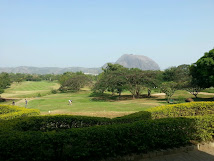
Golf Returns to the Olympics


                                       Image

Golf is set to return to the olympics by 2016. Since the Summer Olympics of 1904, the 'game of men' has been absent from the sporting events. The International Olympics Committee has finally decided to re-introduce the sport in the Olympics.

The President of the Rio de Janeiro Olympics Organizing Committee, Arthur Nuzman said: "As [the 2016 Games] marks the return of golf to the Olympic Games after over a century of absence, this course represents the beginning of a new chapter in the history of the sport. It will enable Rio to host important events in the international calendar and it will be an example of sustainability and preservation of an environmentally protected area. This course will be an excellent facility for the practice and development of golf and will inspire millions of youth across Brazil and the globe. We look forward to welcoming the athletes and spectators to the course in 2016."